Judging an 'In My Substitute Teacher Era' Design for Real Projects
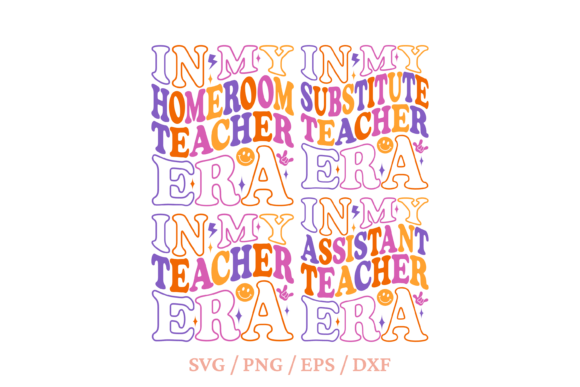
Whenever I see a new digital design, my first instinct isn't to admire it on screen. It’s to imagine how it will look as stitches on fabric. So when I came across In My Substitute Teacher Era Shirt Svg, I immediately started picturing it on a cozy, well-worn sweatshirt. The phrase has a playful, relatable, and slightly nostalgic vibe—perfect for casual apparel. The design’s layout, with its clear typographical style, promises good readability, which is half the battle in embroidery.
The Mood It Creates and Where It Naturally Belongs
This design doesn’t shout; it winks. It creates a mood of gentle humor and shared experience. That makes it an excellent candidate for personalized gifts and casual merchandise. I’m thinking of a custom tote bag for a teacher friend, a soft baby blanket for a family just starting out, or, most obviously, a relaxed crewneck sweatshirt. It’s not overly formal or ornate, so it fits perfectly into the realm of everyday, comfort-focused items. The visual personality is straightforward and friendly, which translates well into a clean, satin-stitch lettering approach.
Performance Across Real Embroidery Situations
In practical use, this kind of embroidery design is versatile. For custom apparel like t-shirts and sweatshirts, it’s a winner—the scale (averaging around 11" at its tallest point) is substantial enough to be a central feature on a garment. On a tote bag, it becomes a statement piece. As an embroidered patch, it could be applied to caps or aprons for a craft fair vendor’s uniform. For small business merchandise, say in a boutique focusing on educators or nostalgic themes, it adds a touch of personality without being gimmicky.
It also holds value in digital product previews and printable mockups. The included PNG at 300dpi provides a high-quality asset for creating listings, whether you’re an Etsy seller offering the finished embroidered product or a digital product seller offering the design files themselves. The multiple file formats (SVG, EPS, DXF) mean it’s ready for various craft business applications beyond embroidery, like for cut machines, which broadens its commercial appeal.
Where Caution is Needed: Fabric and Scale
While the design is adaptable, its application requires some practical thought. On very textured fabrics like thick towels or certain blankets, the clarity of the lettering could get lost if the stitch density isn’t adjusted. On stretchy fabric like a standard t-shirt, a good stabilizer is non-negotiable to prevent puckering around the larger letters.
I would avoid scaling it down too much for very small hoop sizes. The detail level in the lettering, depending on the specific font rendering, might not translate well at tiny dimensions—small, intricate serifs or corners could become muddled. Similarly, on dark fabric, the thread color contrast needs to be bold and deliberate; a pale thread on a black sweatshirt would look fantastic, but a mid-tone gray might just fade away. For curved surfaces like caps, careful placement is key so the design doesn’t warp around the seam.
How This Design Elevates Your Finished Product
From a professional perspective, using a clean, well-proportioned design like this directly impacts customer trust and perceived product value. It looks intentional and well-made, not slapped on. This boosts handmade presentation and lends professionalism to your work. For a personalized gift, it feels thoughtful and specific, increasing its giftability. In a commercial setting, it supports brand consistency if your shop has a witty, personable tone.
It’s also highly recognizable. In a crowded craft fair or online marketplace, a well-embroidered "In My Substitute Teacher Era" sweatshirt catches the eye and connects quickly with its audience, driving buyer engagement. It’s a conversation starter stitched onto fabric.
Practical Notes from the Embroidery Hoop
Before running this embroidery file on a client’s item, I always follow my own checklist. First, test the design on scrap fabric—a piece similar to the final project fabric. This reveals how the stitch density behaves and whether any small details need tweaking.
Check thread color contrast rigorously. View the design in black and white mockups to see if the values hold up. Always use proper stabilizer for the chosen fabric. And crucially, confirm the licensing before selling finished items. While the description notes the files can be used for scrapbooking, cut machines, and printable decoration, it’s your responsibility to verify if commercial use of the embroidered end product is permitted.
For machine embroidery design conversion, the vector files (SVG, EPS, DXF) are your starting point. Their quality will determine how clean your paths are for creating satin stitches or fill stitches. Remember, a design this size on a sweatshirt or bag is a commitment of thread and time, so a good digital foundation matters.
In My Substitute Teacher Era Shirt Svg ultimately feels like a reliable, mood-setting asset. It’s not the most complex design, but in the world of crafts and graphics, that’s often a strength. It offers a clear, embroidered statement that resonates, and with careful application, it turns into a finished product people will genuinely want to wear, use, or give. That’s the practical judgment that matters most.